
Is the USA still the destination every international student aspires to? On paper, yes – it remains the biggest study destination in the world. But look a little closer and the picture is far more complicated.
Our first regional State of Student Recruitment report for 2026 brings together UNESCO enrollment data, US visa figures, Keystone's own search data, and our ongoing survey of prospective students. In a short video walkthrough, Dr. Mark Bennett, Global Director of Market Insight and Data Product at Keystone Education Group, talks through what stood out most.
Together, those sources show where US recruitment has been, where it is now, and where it might be heading next.
Here are a few of the headlines.
The USA still holds student interest, but it's losing ground to competitors
The USA has been the biggest destination in the ‘Big 4’ for a decade. But it hasn't grown like its competitors, and its share of international students across the USA, UK, Canada and Australia has dropped sharply as a result.
Here's the chart:
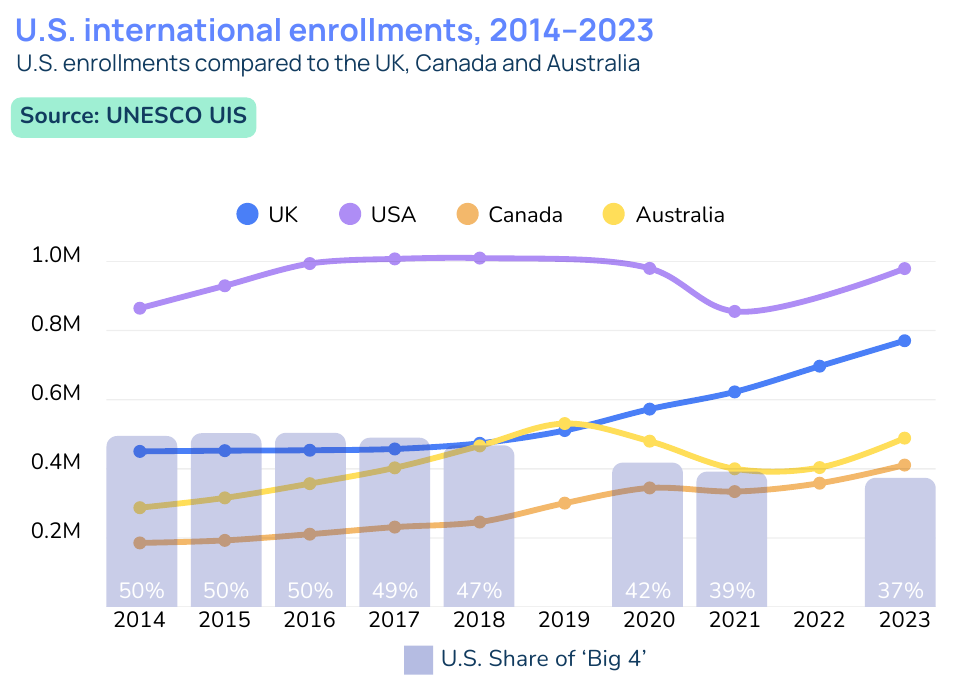
Crucially, that shift started well before the latest wave of disruption.
In 2016, the USA held around half of all international students across the Big 4. By 2023, that had fallen to 37%, as the UK, Canada and Australia all grew faster after the pandemic.
China and India remain the USA's biggest source markets, with India now close to overtaking China. The fastest growth has come from South Asia and West Africa, mirroring a wider global trend.
A turbulent cycle for international student recruitment in the USA
The leading indicators point to a tough current cycle. Student visa issuance has fallen for six quarters in a row, with drops of more than a third at the peak.
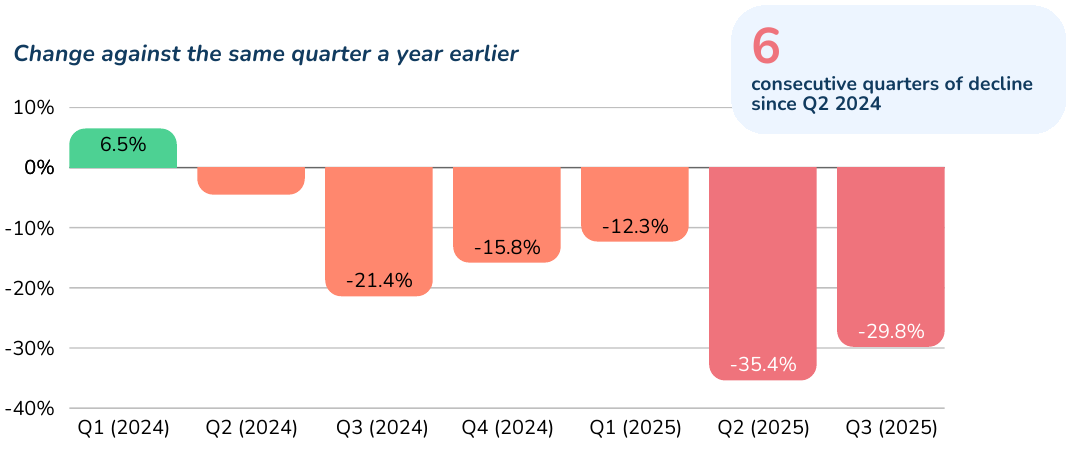
Source: US Department of State
Students are feeling it too. US-bound audiences are now the least committed of any destination we track, with one in five reconsidering their plans.
"We'd expect audiences using our search and discovery platforms to be relatively committed to international study, but U.S. interest is the least resilient of any destination tracked in our data," said Bennett.
Most of those reconsidering are weighing up other destinations rather than delaying. And they aren't just looking at the UK, Canada or Australia. Germany, France, the Netherlands and China all feature on their shortlists too.
As Bennett puts it, we're entering a much more multipolar world for international education.
The problem with studying in the USA isn't quality, it's practicality
This is some of our favorite data in the report. We asked students who want to study in the USA to rate it – the most favorable audience possible – and compared their answers with students heading to the UK, Australia, and Canada.
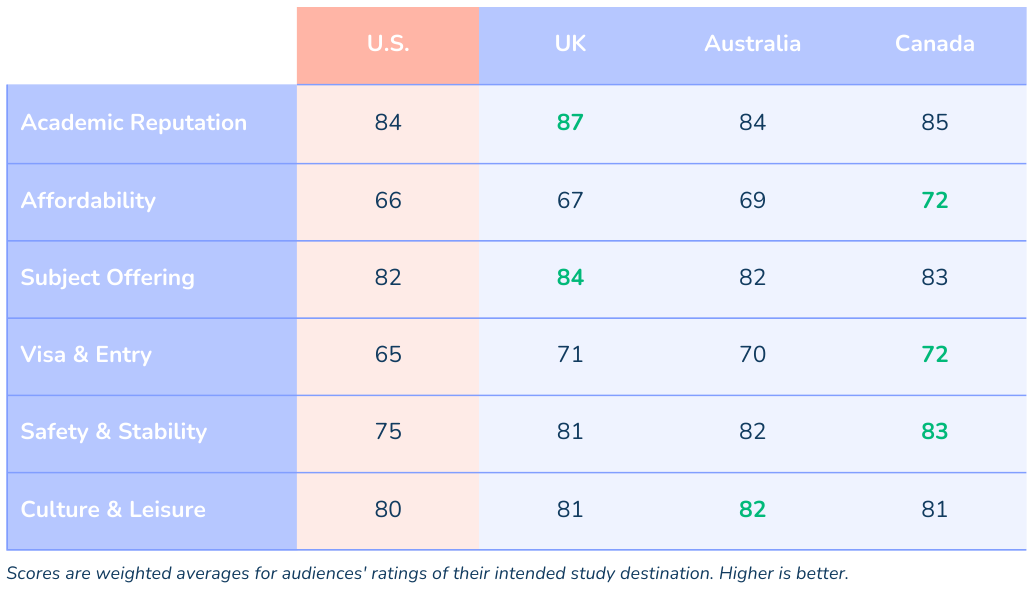
Source: Keystone Pulse survey
The USA holds its own on academic reputation and subject offering. But on the practical questions (can I afford it, will I get in, will I feel safe?) it falls behind. In fact, it doesn't come out on top for a single factor.
That's telling, because these ratings come from the students most inclined to choose the USA. They're already pricing these concerns in. The gaps are widest on visas and entry, and on safety and stability, where the USA trails all three of its Big 4 rivals by at least five points.
International students still want to study in the USA
Here's the hopeful part. Search interest tends to recover during periods of policy calm, and students are increasingly looking for new routes to a US education, from online study to branch campuses closer to home.
More than one in five US-bound students now prefer online study, the highest share of any Big 4 destination and up from 15% in 2024. Nearly half would consider a US branch campus in their home country instead.
Interest is also spread unusually widely across the country. New York, Los Angeles, and Boston top the searches, but there's a long tail beyond them, so the opportunity isn't limited to universities in big-name cities.
The demand is still there. It's just finding different paths.
What's next for international student recruitment in the USA
The USA's appeal is real, but so are the barriers. For universities, the challenge is as much about clarity as it is about policy: helping prospective students understand what is and isn't changing, and what they can do about it.
Students are trying to keep up with fast-moving announcements and work out what actually affects them. The universities that respond quickly, clearly, and consistently will be best placed to keep them engaged.
Want the full picture?
There's plenty more in the full report, including:
- Regional search trends, and the one audience bucking them
- Where US-bound students would go instead
- Why is U.S. interest spread so widely across the country
- How online and branch campus interest varies by level of study

Want to learn more?
Watch the recording of the report walk-through, "State of Student Recruitment 2026: U.S. Edition," which highlighted the key takeaways and trends shaping the student recruitment landscape in the U.S.