Higher Ed Chats
May 28th, 2025
23 minutes
The Future of International Student Mobility
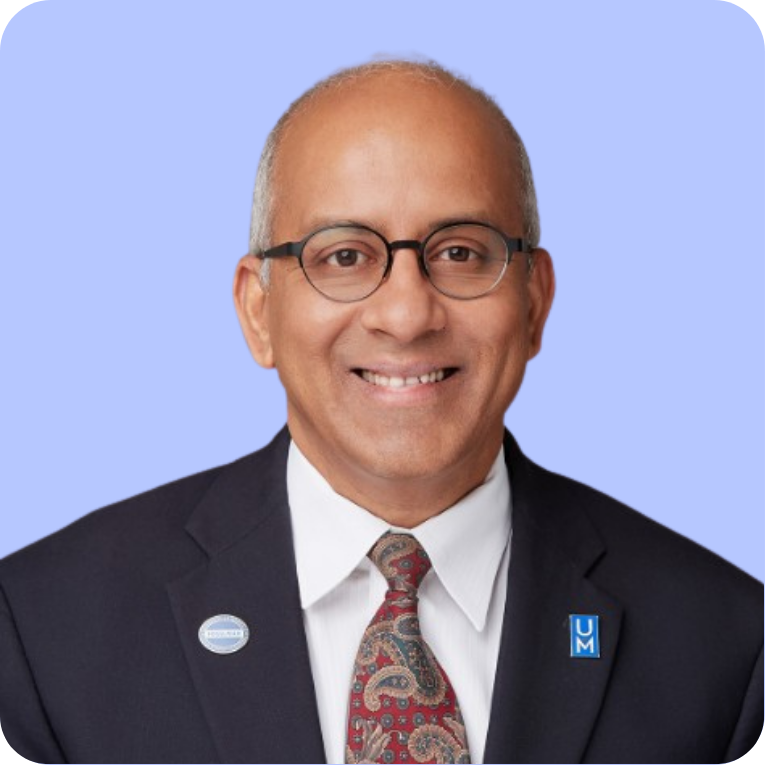
Krishnan has spent 25 years at Memphis, helping build one of the most cost-competitive Carnegie R1 institutions in the United States, with around 1,400 international students from nearly 90 countries. That on-the-ground experience shapes the conversation throughout. The University of Memphis isn't a household name internationally, but that's part of the point: institutions that compete on outcome value rather than brand prestige are gaining ground precisely because today's students are doing their homework. Where students once applied to three to five universities, they're now applying to around 15. They arrive at conversations knowing cost structures, post-graduation visa pathways, and quality benchmarks as well as the admissions teams they're talking to.
The episode's centerpiece is the weakening position of what Krishnan calls "the big four", the US, UK, Canada, and Australia, as destination markets. All four face declining domestic populations without continued immigration. "All these four countries will have declining population if they don't have immigration," he says. But no single emerging destination market is large enough to absorb the students who might redirect away from these traditional hubs. Krishnan's read is that transnational education will become the primary growth vehicle, and that countries with clear national strategies, straightforward visa processes, and demonstrable student outcomes will be the ones to benefit.
Technology runs through the conversation as a force that's reshaping both sides of the enrollment equation. AI adoption in higher education is moving faster than any prior technology cycle. As Krishnan puts it: "The information asymmetry that used to exist between the university and the student has been leveled by technology." That has real implications for how institutions communicate. Generic messaging doesn't cut through anymore. Student ambassador programs, consistent brand language across every market touchpoint, and country-specific content aren't optional extras, they're the baseline.
Hear the full conversation for Krishnan's predictions to 2030, his thinking on Generation Alpha and gamification, and why the University of Memphis's arguably lowest cost-of-attendance among Carnegie R1 institutions has become a genuine competitive asset in international recruitment.
Who’s in the episode?
Balaji Krishnan

Scott Miller is the host of Keystone Higher Ed Chats and the Executive Director of Keystone's international division, bringing over 11 years of EdTech experience to conversations about global education.
After graduating from DePauw University, living and working in different cultures showed him that stepping outside your comfort zone doesn't just broaden your horizons; it reshapes them entirely. That belief in the transformative power of international experiences brought Scott to Keystone in 2010, where he's spent over a decade (and counting) helping higher education institutions reach students worldwide.
On Keystone Higher Ed Chats, Scott speaks with thought-leaders in the industry about what he's most passionate about: how education changes lives, how cultural experiences broaden perspectives at any age, and how Keystone's mission—connecting students with their ideal higher education institution—makes those life-changing moments possible.
Timestamps & Takeaways
Timestamps
00:00
Introduction: Scott Miller welcomes Balaji Krishnan, Vice Provost for International Affairs at the University of Memphis
02:15
Balaji's background: 25 years at Memphis, path from India to the US
06:09
University of Memphis as a case study: R1 status, international enrollment, cost of attendance
08:00
ROI as the primary driver: why low cost of attendance has become a recruitment differentiator
10:53
Brand consistency and student ambassadors as recruitment engines
14:43
Generation Alpha and gamification: what's coming for higher ed recruitment
16:02
The shifting destination market: how the "big four" are losing ground
18:00
Emerging destinations and why no single country can absorb the overflow
19:06
Transnational education (TNE) as the primary growth vehicle for the next decade
23:05
AI and technology adoption in international student recruitment
26:43
Predictions to 2030: what institutions and countries need to do now
28:46
Information parity: students now know as much as enrollment staff
30:24
Closing thoughts and advice for institutional leaders
Takeaways
Make cost of attendance a headline, not a footnote
The University of Memphis positions itself as arguably the lowest-cost Carnegie R1 institution in the country, and Balaji Krishnan treats that as a core recruitment message, not a disclosure buried in a financial aid PDF. As ROI has become the primary decision driver for international students, institutions with genuine value advantages should be naming that advantage clearly and early in every market-facing channel. If your program offers strong outcomes at a lower total cost, your marketing team should already be leading with that.
Build a student ambassador program before you need one
Krishnan is direct on this: consistent brand messaging carried by current international students is one of the most effective recruitment tools Memphis uses. Students researching universities today cross-reference what institutions say about themselves against what enrolled students actually report. That gap, if it exists, kills conversion. Ambassador programs take time to build credibility, so institutions that don't have a structured one in place are already operating at a disadvantage in high-competition source markets.
Treat AI adoption as a policy decision, not a compliance problem
Krishnan's position is clear: "That ship has sailed. It is here to stay." The question he puts to institutions isn't whether to allow AI but whether they're teaching students to use it well. Recruitment and enrollment teams face the same decision. Institutions that haven't taken an explicit position on how AI fits into their student engagement, content strategy, and staff workflows are making a choice by default, and it's the wrong one.
The "big four" decline isn't temporary, plan for TNE now
The US, UK, Canada, and Australia collectively face the same structural problem: declining domestic populations without immigration. Krishnan predicts transnational education (TNE) becomes the primary growth vehicle as a result. For institutions in traditional destination markets, that means the model of waiting for students to come to you is running out of runway. Partnerships, branch campuses, and online delivery in source countries are where growth will have to come from.
Expect students to know as much as your staff, adjust accordingly
The information asymmetry that once gave institutions control of the enrollment conversation is gone. Students now apply to roughly 15 universities, compare across them in detail, and arrive at conversations already knowing acceptance rates, outcomes data, and peer reviews. As Krishnan put it: "It's not just the universities choosing students, it's the students choosing universities." The practical implication is that vague or generic messaging fails faster than it used to. Every touchpoint needs to give a student who already knows the basics a reason to prefer you.
Countries with clear national strategies will pull ahead by 2030
Krishnan's 2030 prediction isn't just about which institutions do well, it's about which countries make it easy. Streamlined visa processes, clear post-study work pathways, and a coherent national narrative about welcoming international students will separate winning destinations from those that lose market share. For institutional leaders, this means the macro environment matters: lobbying for sensible policy and actively shaping national narratives isn't just politics, it's enrollment strategy.
You may also like
How the Trump Administration is Reshaping Higher Education
One year into the Trump administration, U.S. higher education looks different in ways that aren't fully visible yet. This episode of Higher Ed Chats brings in Sarah Brown and Rick Seltzer, both senior journalists at The Chronicle of Higher Education, to take stock of what's actually changed, what's still playing out, and what it means for higher education...
Let’s talk
Keystone’s team of experts can create a digital marketing strategy
that aligns with your student recruitment and enrollment goals.
Schedule a call with our experts.